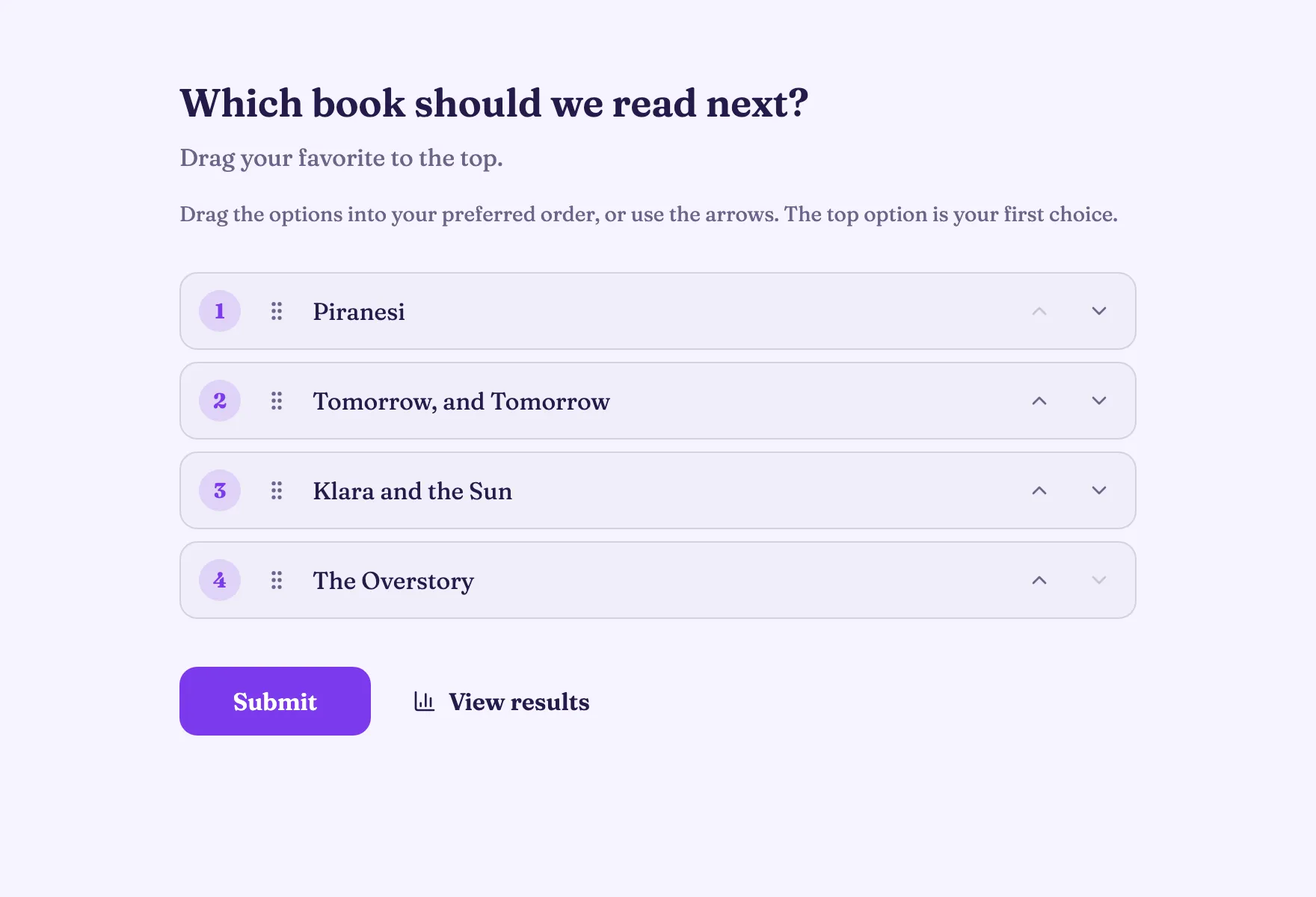
How the count works
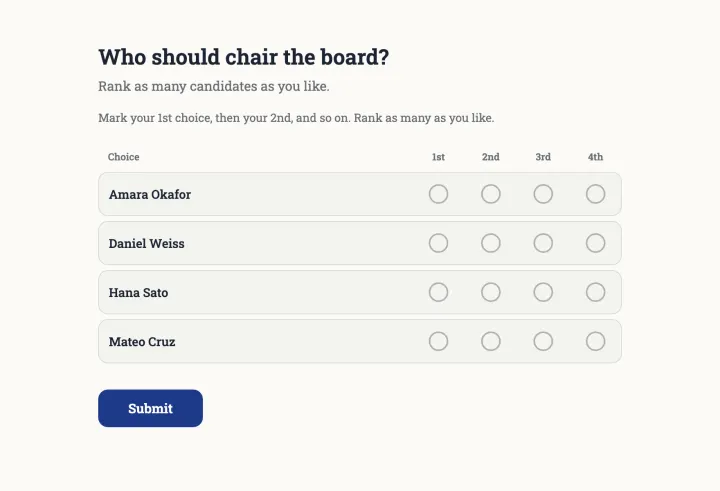
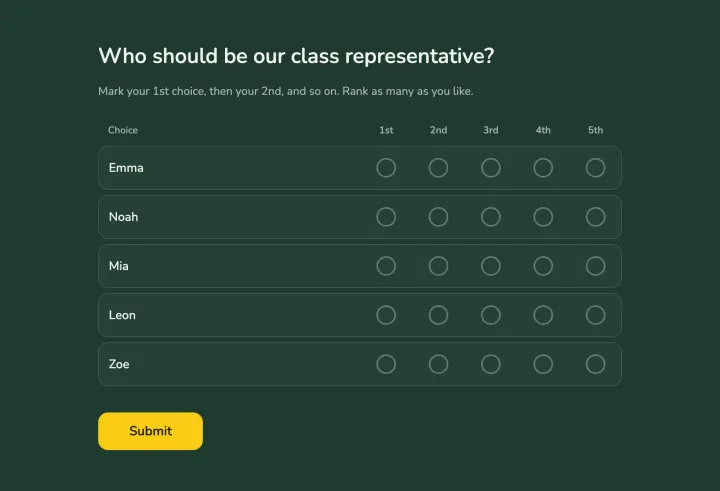
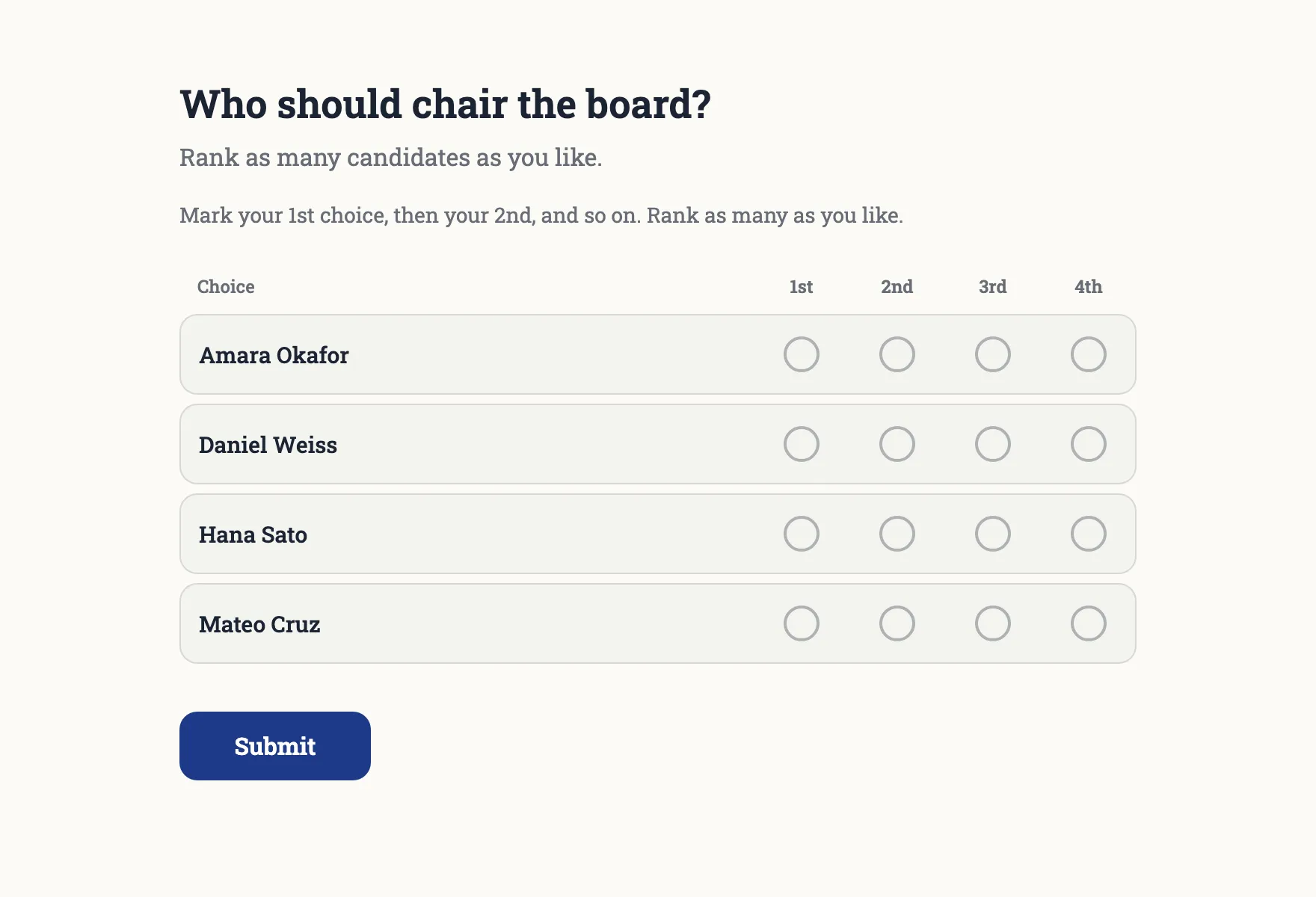
Each voter ranks the candidates: 1st choice, 2nd choice, 3rd choice. Then the count runs in rounds:
- 1 Count everyone’s 1st choice. If a candidate has more than half, they win.
- 2 If not, the candidate with the fewest votes drops out.
- 3 Ballots for that candidate move to their next choice that’s still in the race.
- 4 Repeat until one candidate has a majority.
StrawPoll counts for you, and the results walk through every round, so anyone can follow how the winner emerged.
Why it gives fairer results
With a simple majority vote, two similar candidates split their supporters, and a third can win with a minority. Ranked choice avoids that “spoiler” effect: if your favorite drops out, your vote still counts for your next choice. The winner is someone a majority can accept.
When to use something else
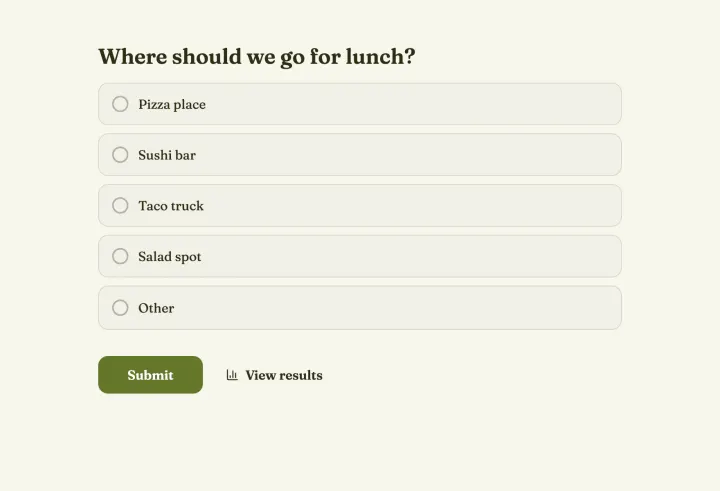
- Several seats: ranked choice finds one winner. For three board seats, use multiple choice and allow more than one answer.
- A full order, like priorities: a Ranking gives points for each place and produces an overall order.
- Long lists: a pairwise comparison is easier to answer than ranking thirty items.
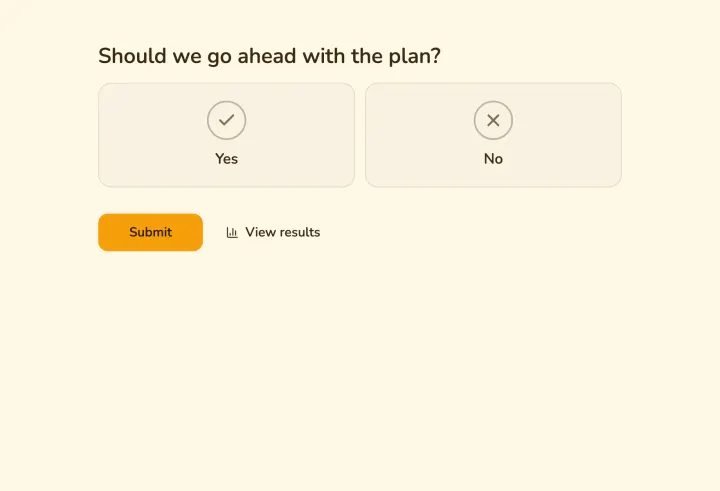
- Two options: a plain yes or no does the job.
Setting up a clear ballot
Start from the Ranked choice election template, or add a Ranked choice voting question. Decide whether voters rank every candidate or only their top few; three choices are plenty for most elections and quick on a phone.
Turn on Randomize option order, so no candidate gains from being listed first. Write one line about each candidate in the description, and explain in a sentence how the count works. Voters trust what they understand.
Keeping it fair
For a secret ballot, hand out unique codes. Set Open & close dates, keep Access to results at After the form closes, and leave Allow changing responses off so every ballot is final. See Run a fair election.