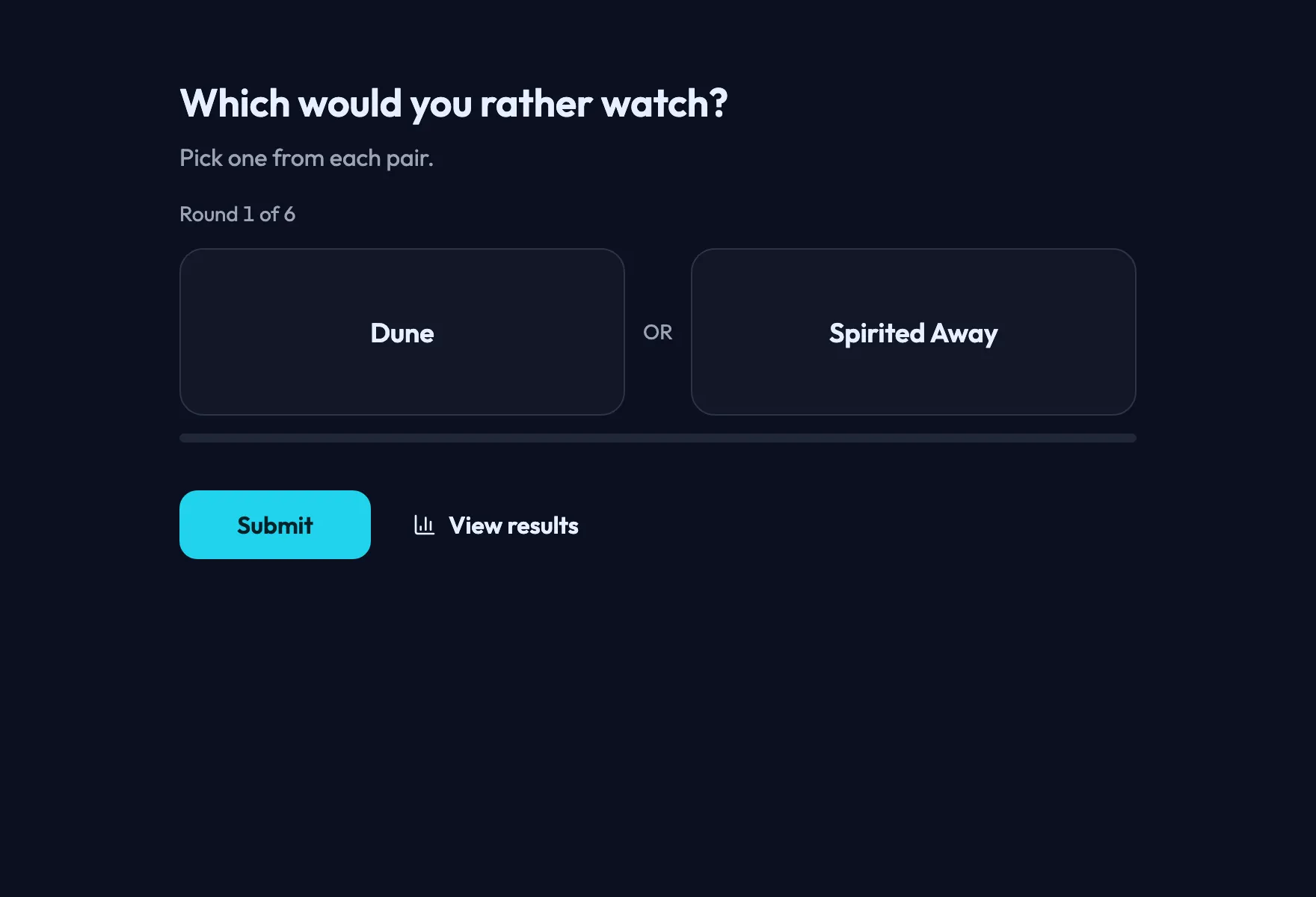
Why two at a time works
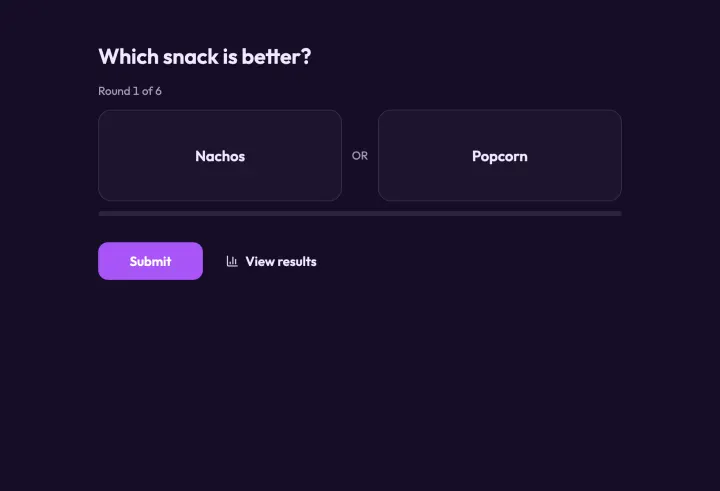
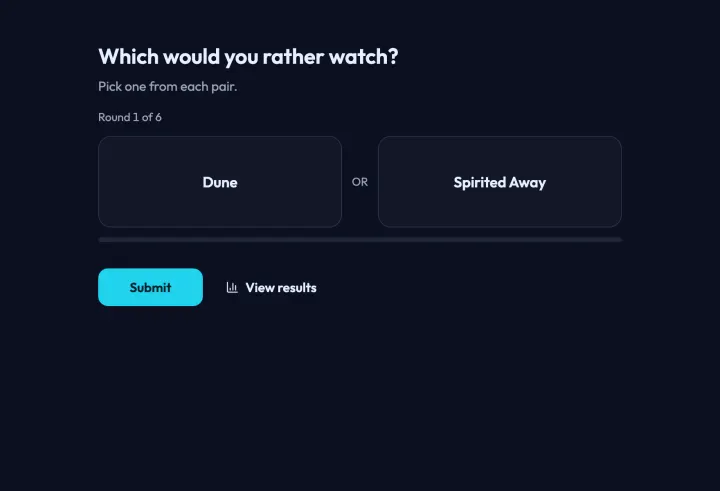
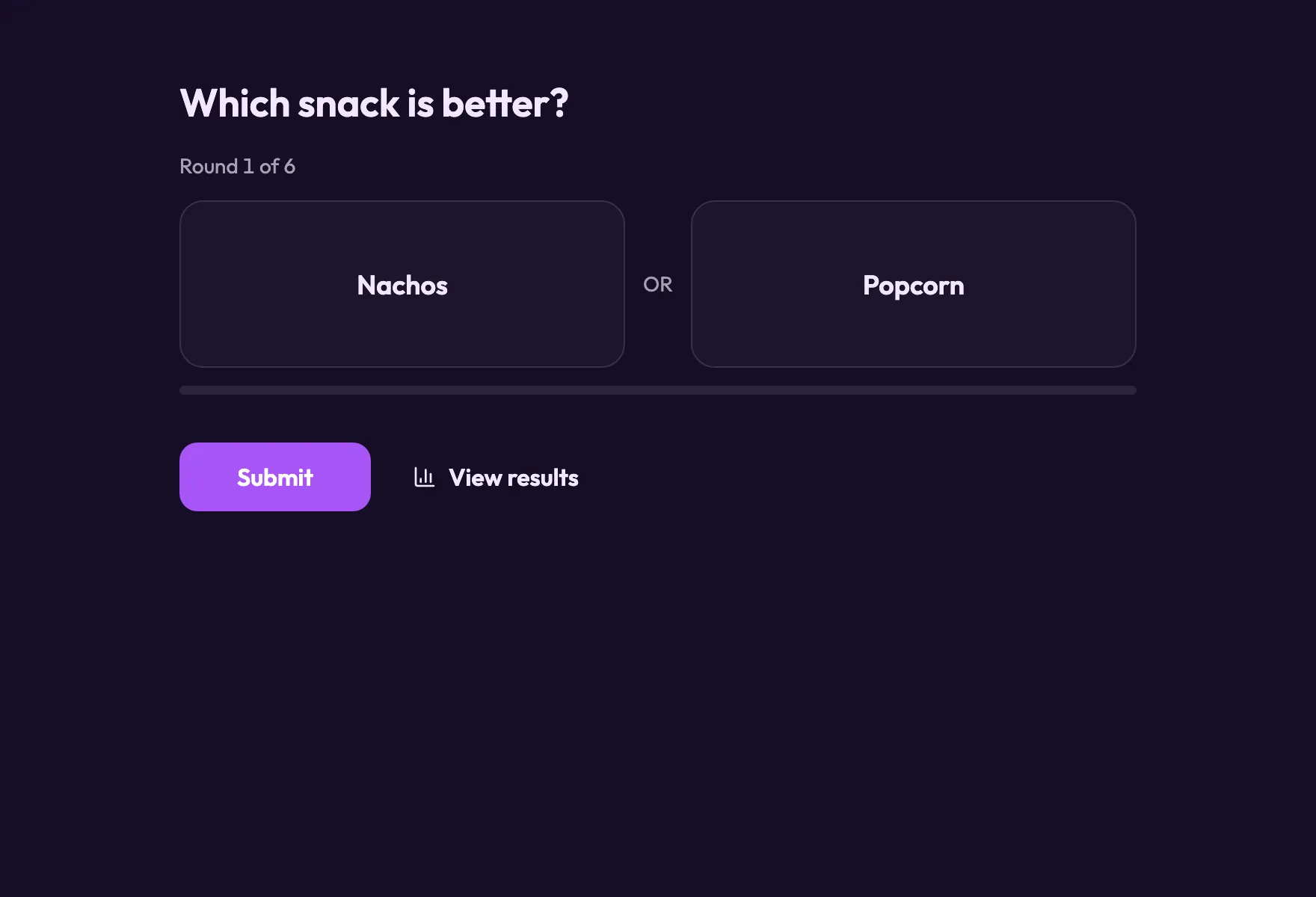
Ranking a long list on a phone is a chore: people lose track, drag items around and give up. Picking the better of two is quick and needs no thought about the rest of the list. Each voter answers a series of matchups, and every answer feeds one overall ranking.
Matchups are also fun to answer and fun to watch, which makes them a good fit for streams, events and friendly debates.
How the ranking is built
Every matchup counts. The results rank the options by how they did across all their matchups. That rewards the option that wins against most others, not just the one with a loyal fan club, which makes pairwise a fair way to pick among friends.
Setting it up
- 1 Start from the Best of matchups template, or add a This or that question.
- 2 Add every option. There’s no limit, and long lists are where pairwise shines.
- 3 Under Access to results, choose whether voters see the ranking right away, after voting, after the poll closes or not at all.
- 4 Share the link, or show the ranking in present mode while votes come in.
Writing options that compare well
- Keep them short. Each matchup should be readable at a glance.
- Keep them alike in kind. “Pizza or sushi” compares; “pizza or leaving early” doesn’t.
- Avoid overlaps. If two options mean almost the same, merge them.
- For things judged by eye, like logos or photos, a picture poll suits better.
Pairwise, ranking or ranked choice?
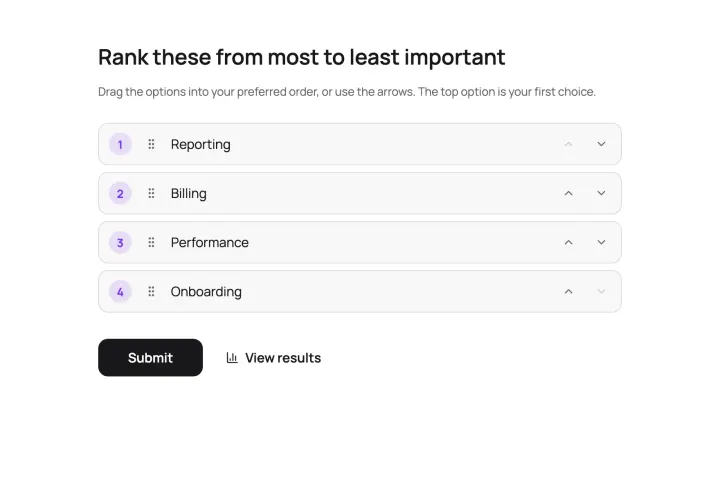
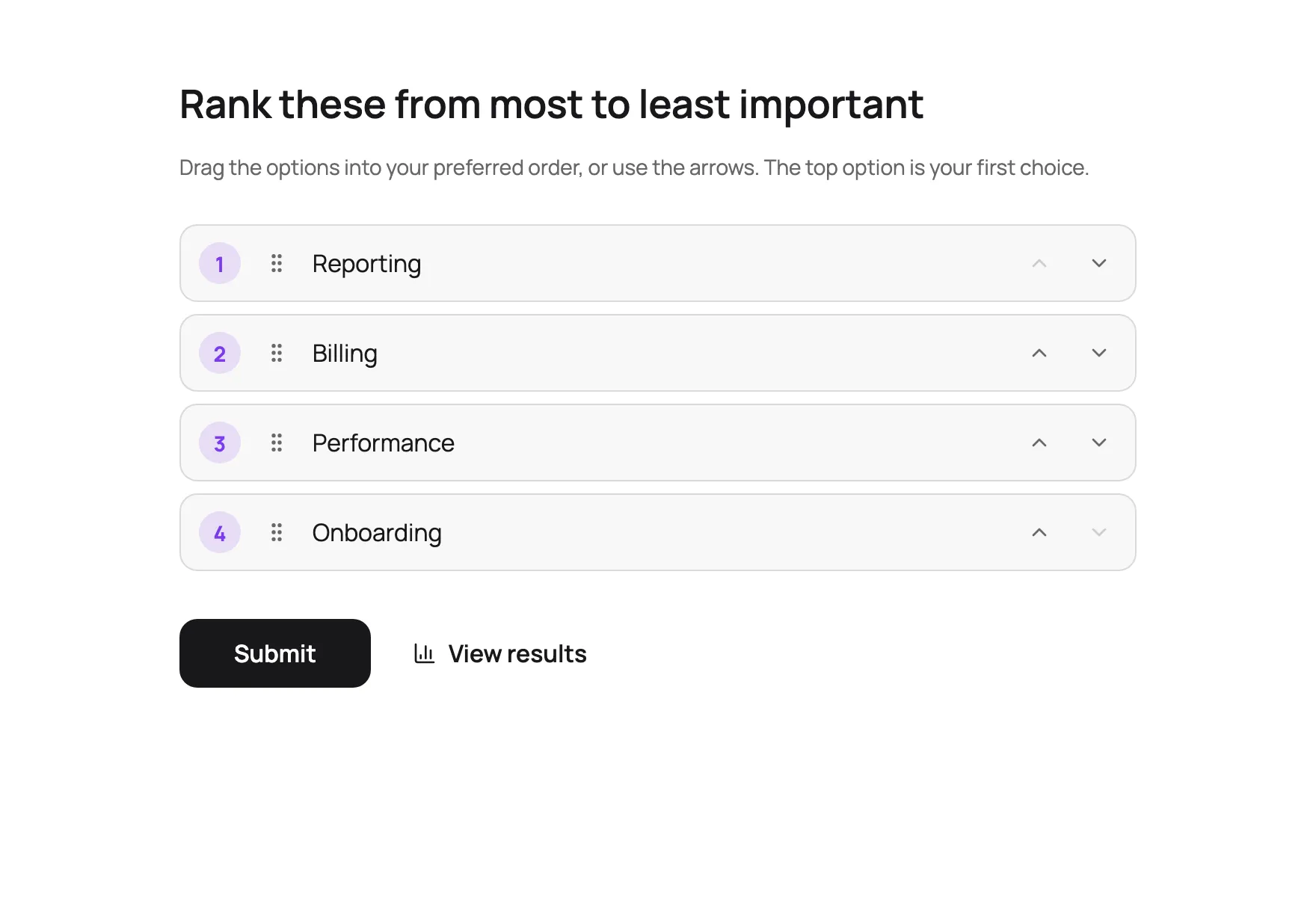
Use pairwise for long lists and an overall order. Use a Ranking when the list is short and you want people to see all options at once. Use ranked choice when you need one winner a majority accepts, like an election.